
What to Expect During a Tree Removal Service
Standing in your backyard and looking up at an overgrown, decaying, or storm-damaged trunk can bring a mix of anxiety and uncertainty. Mature trees provide beauty, refreshing shade, and curb appeal, but they can quickly turn into major safety risks when diseases rot their core or heavy branches lean over power lines and roofs. Deciding to cut down a tree is rarely an easy choice, but when safety is on the line, clearing out a hazard protects your roof, your cars, and everyone who walks through your yard.
Many homeowners feel slightly overwhelmed because they simply do not know what actually happens once a commercial work truck pulls up to the curb. Watching heavy limbs swing from ropes while roaring chainsaws slice through dense timber can feel intimidating if you do not understand the process.
Learning how an experienced crew sets up their gear, dismantles heavy canopies, and hauls away debris takes the mystery out of the visit and puts your mind at ease. According to the Home Guide, it takes about 1.5 to 2 hours to fully remove a tree. Investing in a qualified tree removal service ensures that every cut is guided by science, rigorous safety standards, and practical field experience. Taking a closer look at each phase of the project shows how skilled arborists transform a hazardous situation into a clean, safe, and open landscape.
Assessing the Work Zone
Every successful tree project begins with a careful evaluation of the surrounding environment before any saws are fired up. Arborists do not simply walk up and begin cutting; they study branch architecture, identify dead wood pockets, and read natural trunk leans. The team maps out drop paths, checks for underground irrigation pipes, and identifies overhead electric wires that might complicate the process.
Scheduling a dedicated tree removal service gives you the advantage of an experienced eye that spots structural flaws you might easily miss from the ground. The lead arborist determines whether bucket trucks can drive onto the lawn or if climbers must use specialized harnesses and ropes. The crew marks off an exclusion zone on the ground, placing cones and caution tape to keep curious neighbors, family members, and pets far away from the drop area.
Rigging the Canopy Branches
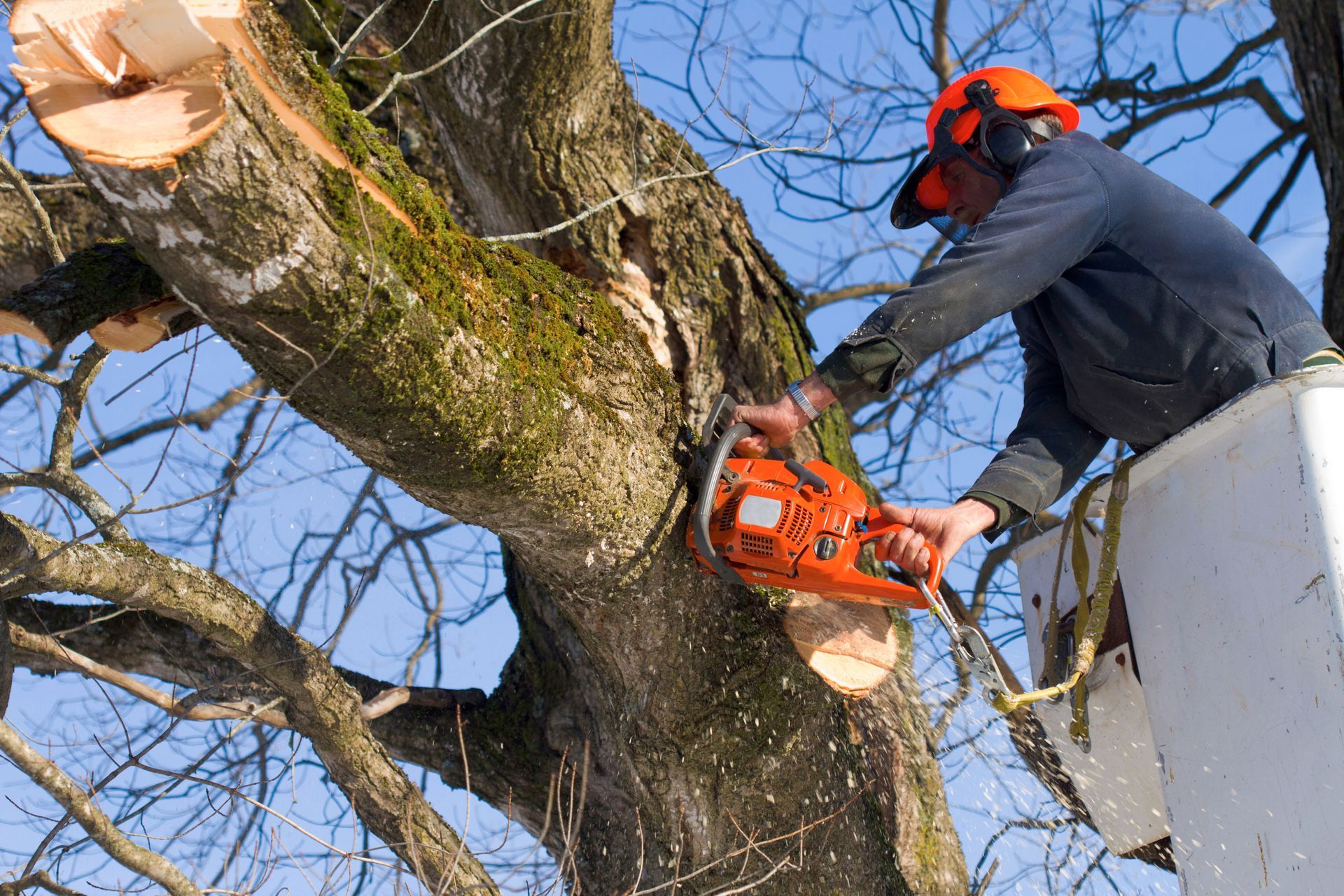
Once ground workers clear the zone, climbers or bucket operators ascend into the crown to begin dismantling the outer foliage and smaller limb sections. Taking down a large canopy rarely involves cutting a tree at the base like a cartoon lumberjack. In suburban settings surrounded by fences, sheds, and glass windows, trees must be taken apart piece by piece from the top downward.
Using an organized tree removal service means watching crews use advanced friction brakes, heavy-duty pulleys, and high-tensile arborist ropes to lower heavy wood gently. Technicians tie off each major limb before making precise relief cuts with their chainsaws. As the branch snaps free, the ground crew controls the lowering rope, guiding several hundred pounds of wood safely to the turf without gouging your grass or smashing patio pavers.
Sectioning the Heavy Trunk
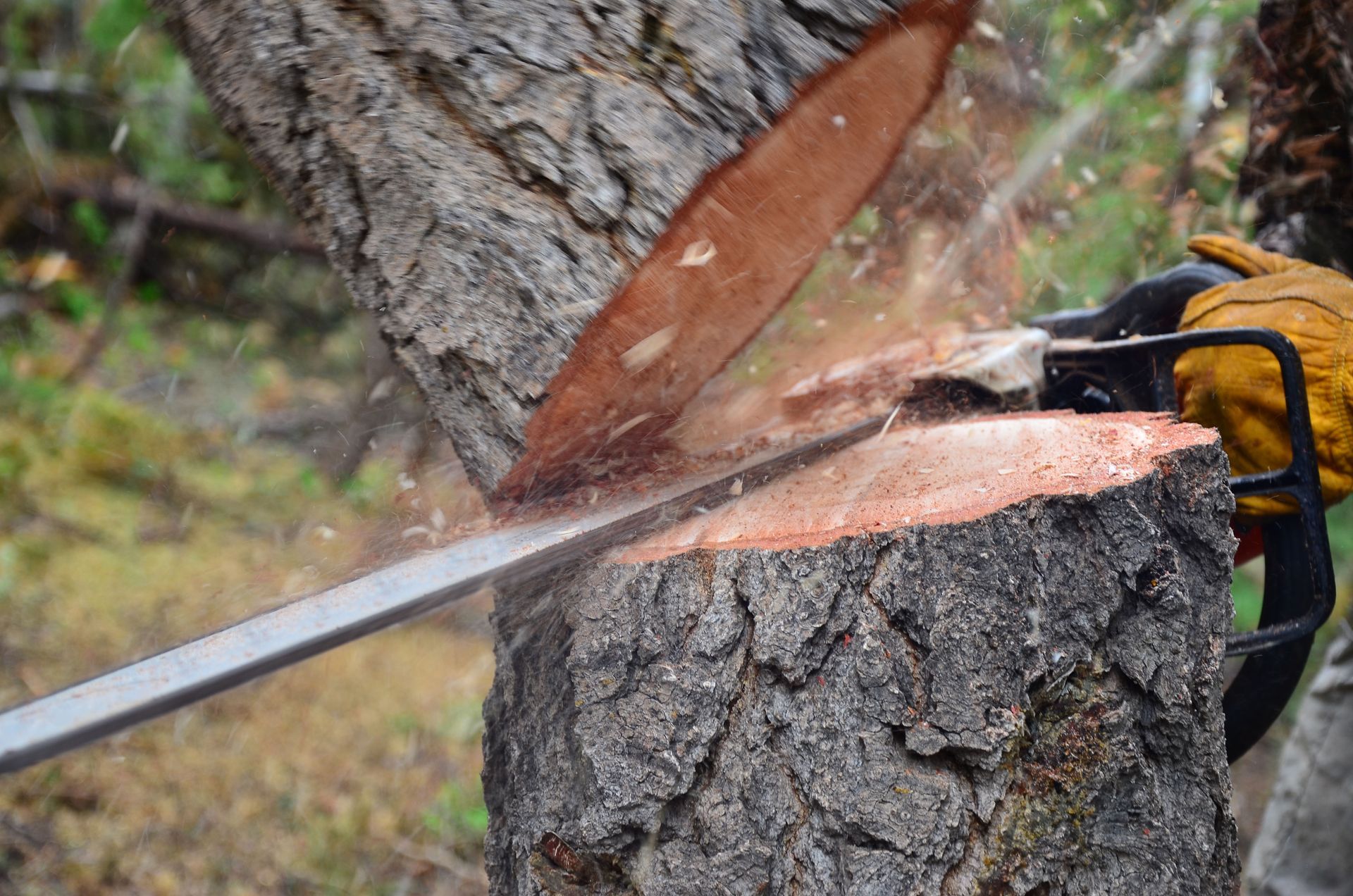
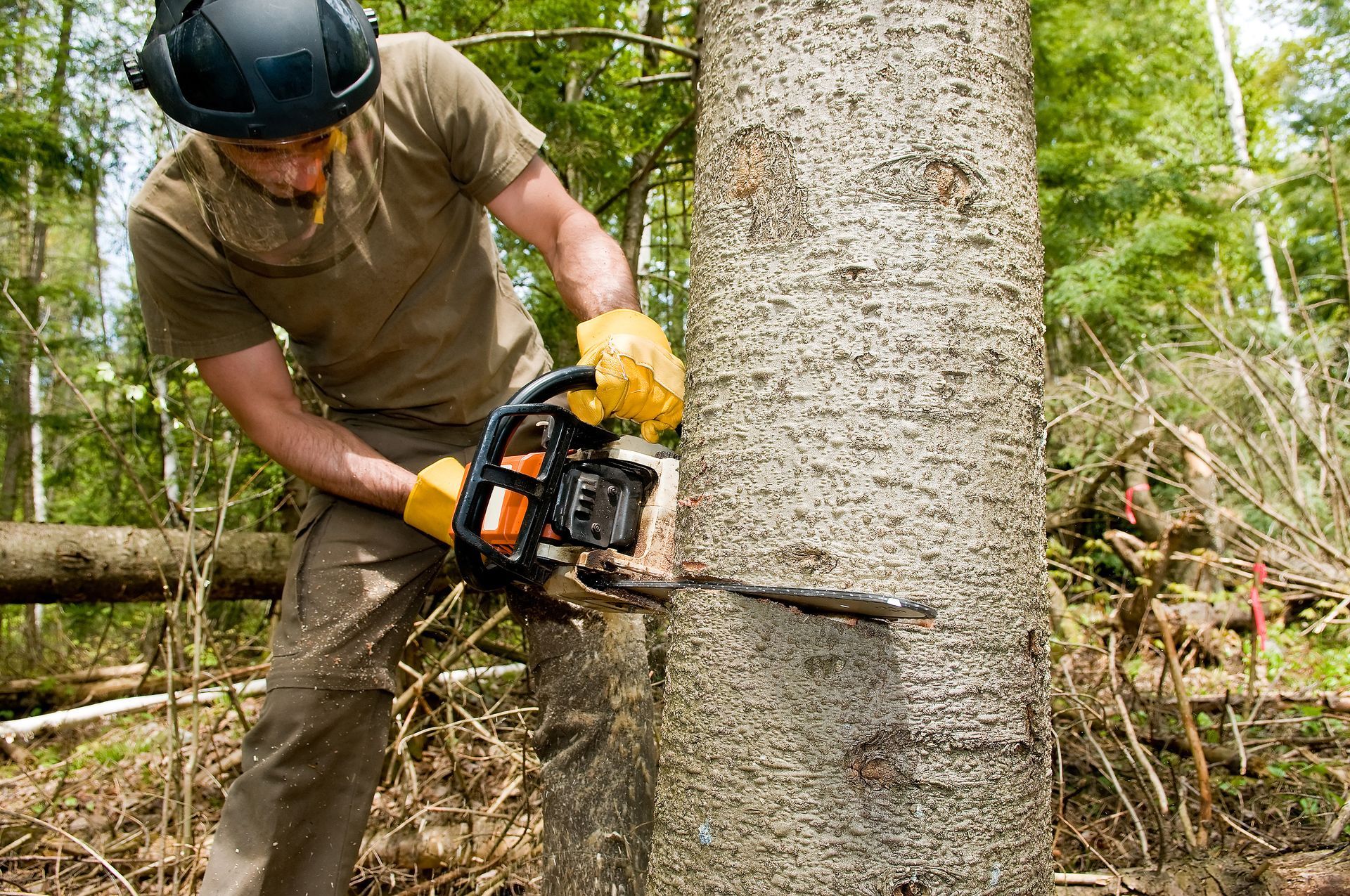
After stripping the crown of its foliage and side branches, the crew faces a bare, vertical timber spar standing upright in your yard. Dismantling a dense trunk requires extreme cutting precision, because each vertical log section packs massive weight and density. The climber secures their position using steel-core lanyards and climbing spikes, methodically working their way down the trunk while cutting it into manageable cylindrical blocks.
Contracting a licensed tree removal service guarantees that this heavy sectioning happens with absolute mechanical control. Climbers cut notches and use guide lines so that thick log segments tumble straight down into soft sawdust beds created on the ground. For giant trunks leaning directly over a sunroom or deck, cranes are often brought in to lift multi-ton timber segments up and over the house. Step-by-step sectioning protects your foundation from heavy ground thuds and transforms a massive vertical giant into manageable firewood-sized rounds.
Processing the Accumulated Debris
Cutting down a mature hardwood produces a mountain of leafy brush, twigs, thick bark chunks, and heavy timber rounds scattered across the lawn. Managing that massive volume of waste is where a lot of manual labor takes place during the project. Ground workers feed smaller branches into industrial wood chippers that shred leafy material into fine organic mulch within seconds.
Relying on a full-service tree removal service ensures that brush chipping and log handling happen continuously while cutters work aloft. Ground workers run compact loaders and wheelbarrows to transport heavy wood rounds directly to transport trailers parked on the street. Instead of leaving you with a chaotic mess of tangled limbs that kill your grass, the crew grinds brush, stacks usable firewood if requested, and loads excess wood onto flatbeds for recycling or off-site processing.
Grinding the Remaining Stump
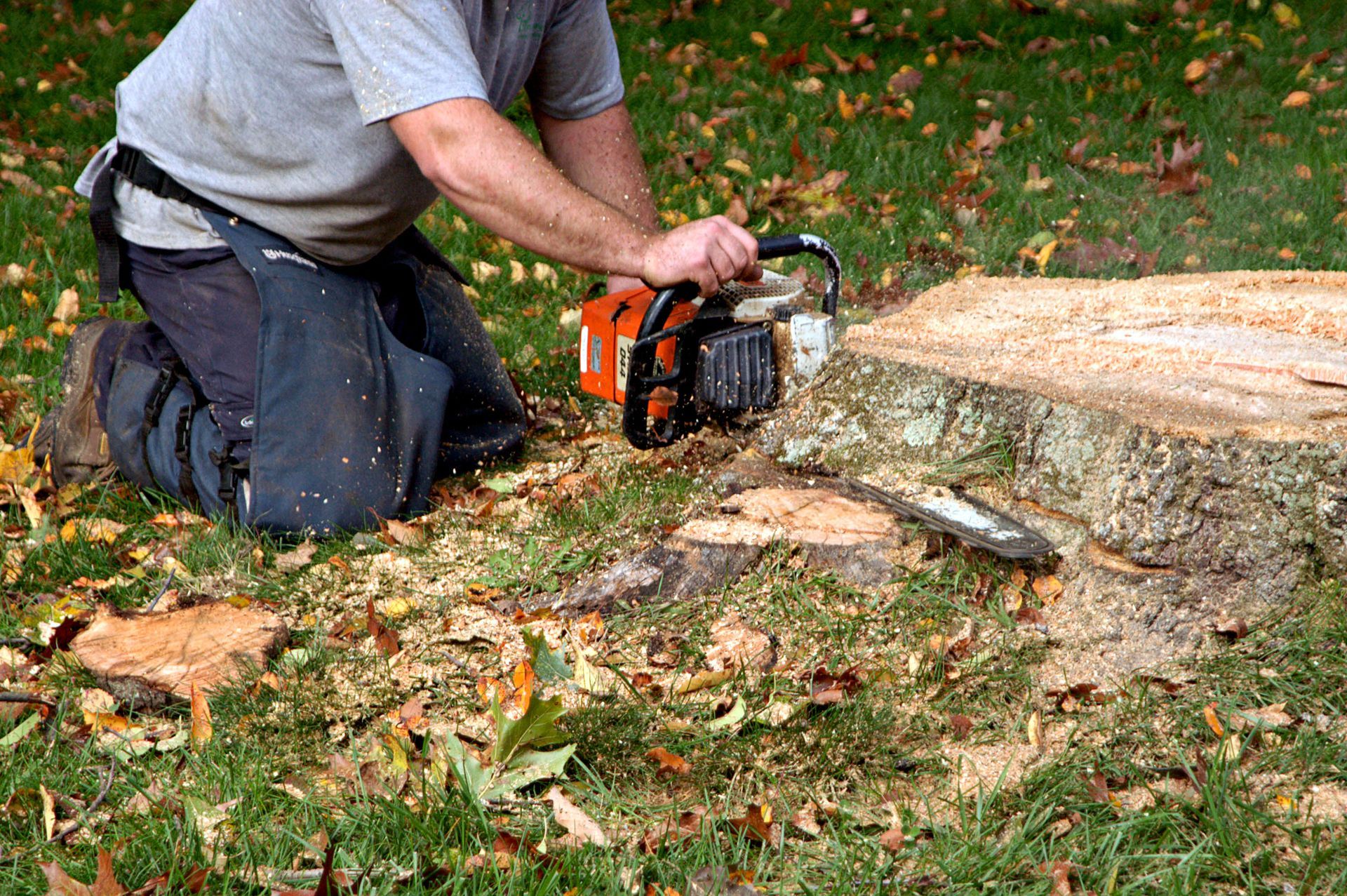
Once the trunk is cut flush with the soil line, a flat wooden base remains firmly anchored in the ground by an extensive root system. Leaving a raw stump behind invites insect infestations, creates an annoying obstacle for your lawnmower, and encourages unsightly fungi or sapling shoots to sprout every spring. Grinding the wood below the ground surface is the standard, modern method for permanently reclaiming that area of your yard.
A comprehensive tree removal service often pairs timber cutting with mechanical stump grinding equipment. Operators maneuver a hydraulic grinder with rotating carbide teeth over the wood, chipping the solid root base down four to eight inches below the surrounding grade. The machine turns dense roots into fine, nutrient-rich wood chips that can be used as garden mulch or shoveled into the hole as backfill.
Raking the Finished Yard
A truly professional tree operation finishes with the same care and attention to detail that went into making the initial cuts. Chipping and sectioning timber inevitably leaves wood shavings, loose leaves, and small twigs scattered across flower gardens, walkways, driveways, and turf. Leaving a client to rake up pounds of wood chips ruins the excitement of having an open, safe yard.
A conscientious tree removal service dedicates ample time at the end of the day to restore your property's neat appearance. Ground technicians use wide landscape rakes, pitchforks, and high-velocity leaf blowers to gather every loose scrap of debris. They sweep sawdust off your patio stones, clean driveway pavement, and clear roofing gutters of any stray twigs that drifted down during cutting. When the crew packs up their tools, your lawn looks tidy, peaceful, and ready for your family to enjoy.
Taking down an unstable, sick, or poorly positioned tree is a major home improvement project that protects your roof, vehicles, and loved ones from unexpected damage. From the initial hazard assessment and intricate rope rigging to heavy trunk sectioning, mechanical stump grinding, and thorough raking, every phase requires gear, physical agility, and years of arborist training.
Trying to tackle hazardous overhead limbs with basic hand tools invites terrible accidents, structural property damage, and severe physical injuries that can change your life in an instant. Partnering with a skilled arborist team ensures that every cut is calculated, property structures are shielded, and your yard is returned to you clean, open, and free of dangerous hazards. When you are ready to eliminate hazardous deadwood, improve outdoor sunlight, and safeguard your property with trusted local expertise, contact Joe's Tree Service, LLC to schedule your comprehensive
tree removal service!
Share On: